Source Nordic CE Pendant Light for Restaurant, Living Room, Dining Room
Find 30 verified options for the nordic ce pendant light suitable for restaurant, living room, and dining room settings. Compare models like P-605 and OM801703, featuring LED sources, iron or aluminum frames, and CE/RoHS certifications to find the right fit for your project.
Key considerations
Products List




Comprehensive Sourcing Guide
Nordic CE Pendant Light Sourcing Guide
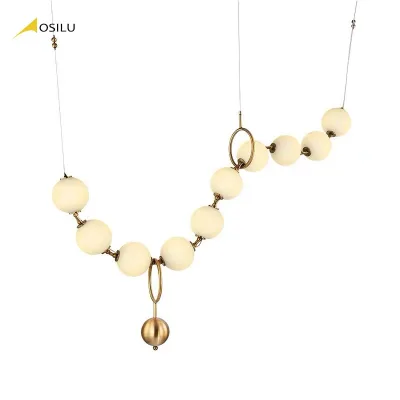
Procuring Nordic CE pendant lights requires balancing minimalist aesthetics with rigorous electrical safety standards for international markets. Buyers must verify that the observed product attributes, such as the specific LED light sources and frame materials like iron or aluminum alloy, align with the intended interior design style. The available data indicates a range of styles from modern to contemporary, often featuring black or gold finishes that suit restaurant and living room environments.
Sourcing decisions should prioritize suppliers who explicitly list CE and RoHS certifications alongside other regional standards like CCC or UL. The presence of these certifications on product listings suggests compliance with European safety directives, yet buyers must confirm that the specific model numbers, such as P-605 or OMD822801-L120, carry valid documentation. Relying solely on general category knowledge without verifying individual product compliance can lead to significant customs delays or safety liabilities in the final market.
Product Scope and Observed Listing Signals
The observed product range includes pendant lights designed for diverse settings, including dining rooms, living rooms, and restaurants, with irradiated areas covering at least 30 square meters. Listings frequently specify a beaming angle of 45 degrees and power consumption ranging from 7 to 26 watts, though some models offer higher wattage options like 36W. The frame materials vary between iron and aluminum alloy, with finishes available in black, gold, or chrome, allowing for customization to match specific interior themes.
Buyers should note that some listings indicate the product is sold without a light source, while others include integrated LED modules with color temperatures of 3000K, 4000K, or 5000K. The packaging standards vary from foam packages to standard export cartons with dimensions like 1261621cm, which impacts shipping costs and handling requirements. Understanding these variations is critical for accurate cost estimation and ensuring the physical dimensions, such as the Dia60 H100cm specification, fit the intended installation space.
Technical Specifications to Verify
Technical verification must begin with the electrical parameters, specifically the voltage requirements which are listed as 220V or customizable based on client requests. Buyers need to confirm the actual power rating of the LED source, as some entries specify 36W while others list a range of 7-26W, which directly affects energy efficiency and heat dissipation planning. The warranty period is consistently noted as two years, but the specific terms regarding light source failure versus structural defects require detailed clarification before finalizing the order.
Dimensional accuracy is equally vital, with observed standards including lengths like L120cm and specific model sizes such as Dia60 H100cm. The beaming angle of 45 degrees suggests a focused light distribution suitable for task lighting or accentuating specific areas, but this must be validated against the actual room layout. Additionally, the material composition, whether iron or aluminum alloy, influences the weight and mounting hardware requirements, necessitating a review of the structural integrity data provided in the product specifications.
Compliance and Safety Documentation
Compliance documentation is a primary concern, with observed certifications including CE, RoHS, CCC, UL, and VDE across different product listings. Buyers must ensure that the specific model they intend to purchase carries the exact certification required for their target market, as the presence of one standard does not automatically validate another. The listing of CE and RoHS is common, but the absence of specific test reports or certificates of conformity for the batch being ordered poses a risk for regulatory clearance.
Safety standards also extend to the manufacturing process and material safety, particularly regarding the use of aluminum alloy and iron frames. The "0.02cbm" standard mentioned in the context likely refers to volume specifications rather than a safety standard, so buyers should not assume it covers electrical safety. It is essential to request the full test reports for the specific voltage and wattage configurations to ensure the lighting fixtures meet the rigorous safety protocols of the destination country before shipment.
Cost Drivers and Commercial Terms
Cost drivers for these lighting fixtures include the complexity of the frame material, the type of LED integration, and the level of customization requested. Listings indicate that customization is available for frame colors and voltage, which can increase the unit price and extend the lead time. The minimum order quantity (MOQ) varies, with some suppliers requiring 30 pieces while others may accept lower volumes, directly influencing the per-unit cost and the overall budget for the procurement project.
Commercial terms such as EXW, FOB, CIF, and CFR are standard in the trade, and the choice of shipping method—express courier, air, or sea—significantly impacts the final landed cost. The factory location in Henglantown, Zhongshan City, China, is a known hub for lighting, but buyers must calculate the specific freight charges based on the product volume and weight. Understanding these trade terms is crucial for managing cash flow and ensuring that the total cost of ownership remains within the projected budget.
Supplier Qualification and Quality Control
Supplier qualification should focus on verifying the factory address and the specific production capabilities for OEM and ODM services. The provided data points to a factory in Zhongshan City, a region known for lighting manufacturing, but buyers must confirm the specific facility's capacity to handle custom orders and maintain consistent quality. The mention of a 1% crystal spare part suggests attention to detail in assembly, yet this should be validated as a standard practice rather than an exception for every order.
Quality control protocols must be established to ensure that the finished products match the observed specifications regarding finish color, frame material, and light source performance. Buyers should implement pre-shipment inspections to verify the packaging integrity, such as the foam package or standard export carton, to prevent damage during transit. Establishing a clear communication channel for addressing defects and ensuring that the two-year warranty is honored is essential for maintaining a reliable supply chain.
Long-Term Procurement Checks
Long-term procurement success depends on monitoring the consistency of certifications and the reliability of the warranty period over time. Buyers should periodically re-verify that the CE and RoHS certifications remain valid for the specific models being ordered, as regulatory requirements can change. The two-year warranty guarantee is a key selling point, but the actual claim process and the supplier's responsiveness to warranty requests must be tested during the initial order cycle.
Supply chain resilience is another critical factor, requiring regular checks on lead times and the ability to meet fluctuating demand without compromising quality. The availability of customization services for voltage and color should be maintained to adapt to future market trends or specific client requests. Establishing a long-term partnership with a supplier who can consistently deliver on the observed technical specifications and commercial terms will mitigate risks associated with market volatility and regulatory changes.
FAQs
What certifications do these pendant lights have?
These pendant lights feature CE and RoHS certifications, ensuring compliance with European safety and environmental standards. Some models also include CCC, UL, and VDE marks. This variety allows buyers to select fixtures that meet specific regional regulatory requirements for commercial or residential installations without additional testing.
Can I customize the voltage for these lights?
Yes, voltage customization is available to match your local power standards. While standard models operate at 220V, manufacturers offer tailored voltage options upon request. This flexibility ensures safe integration into diverse electrical systems, making the lights suitable for international projects requiring specific power configurations.
What materials are used for the frame?
Frames are constructed from durable iron or aluminum alloy, providing structural integrity and aesthetic appeal. Iron frames often feature black finishes, while aluminum options may appear in gold or chrome. These materials support modern and contemporary styles, ensuring longevity and resistance to corrosion in various indoor environments.
What is the typical warranty period?
The standard warranty period is two years, guaranteeing product reliability and manufacturer support. This coverage applies to LED light sources and structural components, offering buyers peace of mind. Extended warranties may be available through specific suppliers, but the baseline two-year term is common across most listed models.
How are these lights packaged for shipping?
Products are packed using foam packaging or standard export cartons to prevent damage during transit. Specific dimensions vary by model, with some items measuring 126x16x21cm per carton. This secure packaging ensures that delicate components like crystal trimmings or LED modules arrive intact, ready for immediate installation.
What is the minimum order quantity?
The minimum order quantity ranges from 1 to 30 pieces, depending on the supplier and model. Some vendors require a MOQ of 30 PCS for standard items, while others offer lower thresholds for customized orders. This flexibility accommodates both small-scale residential projects and larger commercial procurement needs.